A Coalition Under Strain
Germany’s political landscape is once again showing signs of instability. Merz’s fragile coalition is buckling under mounting pressure to deliver long-promised reforms. Disagreements within the ruling alliance have intensified, leaving the government struggling to maintain unity and direction.
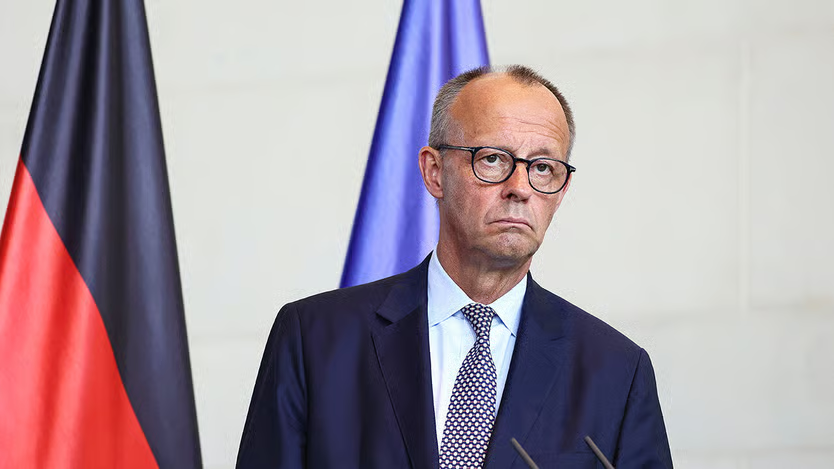
Friedrich Merz, leader of the Christian Democratic Union (CDU), faces growing frustration from both allies and opponents. His push to overhaul Germany’s economic and immigration policies has sparked heated debates across parliament.
Tensions Within the Coalition
The fragile coalition between the CDU, Free Democrats (FDP), and regional partners has become increasingly divided over key policy decisions. While Merz champions fiscal discipline and pro-business reforms, smaller coalition members demand more social spending and climate action.
According to political analysts, this internal tug-of-war has weakened the government’s ability to pass crucial legislation. Several reform bills have stalled, fueling public criticism and testing the patience of voters who expected swift change.
Mounting Pressure from the Opposition
Meanwhile, the opposition parties are capitalizing on the coalition’s disunity. The Social Democrats (SPD) and the Greens have accused Merz of prioritizing corporate interests over ordinary citizens. They argue that his reform agenda fails to address issues like housing, energy costs, and healthcare.
As the coalition buckles under pressure, opinion polls show a dip in public trust. Analysts warn that if the infighting continues, early elections could become a real possibility — a scenario that could reshape Germany’s political future.
Economic and Social Challenges
Germany’s economy, the largest in Europe, faces significant headwinds. Slow growth, rising inflation, and an aging workforce demand immediate reforms. Merz’s coalition pledged to modernize infrastructure, cut bureaucracy, and attract new investments.
However, policy delays and disagreements have hindered progress. The fragile coalition struggles to balance economic responsibility with social fairness. Businesses demand quick reforms, while unions warn against cuts to worker benefits.
The result is a stalemate that leaves Germany’s reform goals hanging in the balance.
Public Frustration Grows
Across the country, citizens express growing dissatisfaction with political gridlock. Surveys show declining confidence in traditional parties. Many Germans believe leaders are more focused on internal disputes than real solutions.
Merz, aware of the political risks, recently called for “unity and urgency” among coalition members. He insists reforms are essential to secure Germany’s competitiveness and stability. Yet, without compromise, his coalition’s survival remains uncertain.
The Road Ahead
For now, Merz’s fragile coalition faces a critical test. The coming months will determine whether it can overcome division and push forward with reform. Failure could lead to a government collapse — or a significant shift in Germany’s political direction.
What’s clear is that Germany stands at a crossroads. The country’s ability to adapt, reform, and lead in Europe may depend on how Merz’s fragile coalition navigates its internal storms.